





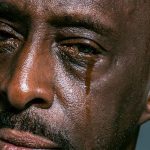



Society often conditions individuals to perceive death as the ultimate thief, depriving us of time, potential, and joy. Survival is elevated as the highest virtue, with significant resources devoted to extending life by any increment. However, critical questions arise when the calculus of existence becomes untenable. When daily life becomes overwhelmingly burdensome, the prospect of death may shift from being viewed as a tragedy to being considered a form of emancipation.
Posing the question, “What if the best aspect of death is freedom?” does not signify surrender; rather, it serves as a critical indictment of contemporary society. When existence demands extraordinary resilience, death may no longer appear monstrous. Instead, it becomes the only unavoidable obligation that requires no repayment.
The Everyday Exhaustion
For many individuals, life has ceased to be a journey of discovery and has instead become a relentless and exhausting administrative task.
Unemployment and Precarious Work: Society asserts that hard work leads to stability, yet many individuals submit numerous job applications only to receive automated rejections. Unemployment extends beyond the absence of income; it represents a structural denial of dignity. For those who are employed, the reality often involves working multiple insecure jobs merely to survive. When daily life is dominated by the constant struggle to meet basic needs, existence may feel punitive rather than rewarding. In this context, death is perceived as the ultimate release from these obligations: no more alarms, rent, or the need to demonstrate productivity within a system that regards individuals as replaceable.
A Premium Subscription to Survival
Perhaps nowhere is the cruelty of modern society more evident than in how it treats the human body.
Unaffordable Healthcare: Health is a fundamental biological necessity, yet it has been commodified as a luxury. A single diagnosis can result in financial catastrophe for a family; essential medications are often prohibitively expensive; and dental care and mental health services are frequently regarded as optional. Many individuals live with persistent anxiety about illness, aware that a decline in health could lead to financial devastation.
When the cost of medical care is prohibitive, the body is perceived as a liability. In this context, the ‘freedom’ associated with death represents release from a situation in which individuals are held hostage by their biological needs. It signifies the end of rationing essential medications, avoiding emergency services due to cost, and neglecting persistent health issues because diagnosis and treatment are unaffordable.
The Erosion of the Social Contract
This suffering is not an inevitable aspect of human existence; rather, it reflects a failure of leadership.
Poor Governance: The social contract requires that citizens contribute to society in exchange for protection, infrastructure, and a basic standard of welfare. This contract has been fundamentally undermined. Governance has devolved into a system characterized by corruption, where leaders prioritize personal gain while public services deteriorate. Deteriorating infrastructure, underfunded educational institutions, and systemic injustice have become commonplace.
Living under poor governance can feel futile, as citizens recognize that those in power are indifferent to their struggles as long as their own interests are protected. The appeal of death in this context lies in its fundamental egalitarianism. Death cannot be influenced by wealth or power; it offers no preferential treatment and is unaffected by corruption. It remains the only true equalizer.
The Psychological Burden of Modern Life
In addition to material challenges, modern existence imposes psychological burdens that exceed what humans have historically been equipped to manage.
- The Epidemic of Isolation: Despite increased digital connectivity, communities have become fragmented. The disappearance of ‘third places’—spaces outside of home and work that do not require financial expenditure—has resulted in individuals facing their challenges in profound isolation.
- The Cost of Living Crisis: Fundamental milestones of adulthood, such as home ownership, family formation, and retirement, have become unattainable for many individuals. These have been replaced by ongoing financial insecurity, characterized by precarious renting and persistent debt.
- Perpetual Crisis: Individuals are continually exposed to negative news, including climate change, geopolitical instability, and economic downturns. Despite this, there is an expectation to maintain composure and productivity in daily work environments.
The Tragedy Inherent in This Premise
Finding solace in the concept of death as freedom is a fundamentally human reaction to an environment perceived as inhumane. It represents the final act of relinquishing a burden that was excessively heavy from the outset.
However, the tragedy lies in the fact that death should not be responsible for providing peace.
If the primary appeal of death is freedom, it is a consequence of a society that imposes significant burdens on daily existence. The attraction to death reflects the shortcomings of contemporary social structures. Recognizing this perspective does not glorify death; rather, it highlights the profound and often unacknowledged exhaustion experienced by modern individuals. It is a call to question why life has become so challenging and a reminder that genuine freedom should be pursued and experienced during life.