






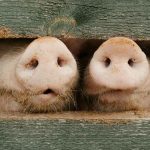


The prohibition against consuming pork represents one of the most prominent dietary restrictions in human history. This avoidance, rooted in the foundational texts of Abrahamic religions and supported by early epidemiological observations, has persisted for millennia.
Understanding the convergence of the Torah, the Quran, the Bible, and scientific history on this topic requires examining the intersection of spiritual devotion, ancient hygiene practices, and biological realities. Although modern agriculture and food safety standards have reduced many risks associated with pork, historical scientific and anthropological evidence elucidates why early societies regarded pigs as significant public health hazards.
1. The Torah: The Law of the Cud and the Hoof
In Judaism, dietary laws known as kashrut determine which foods are considered kosher (permissible) and which are non-kosher. The regulations concerning land animals are particularly specific and are based on biological characteristics.
- Criteria: According to Leviticus 11 and Deuteronomy 14, a land animal is considered clean only if it possesses two physical characteristics: completely divided hooves and the ability to chew the cud (ruminate).
- The Pig’s Failing: The Torah explicitly points out the pig as an anomaly that fails this test. Leviticus 11:7-8 states: “And the pig, though it has a divided hoof, does not chew the cud; it is unclean for you. You must not eat their meat or touch their carcasses; they are unclean for you.”
- Purpose: For observant Jews, abstaining from pork is primarily an act of obedience and sanctity, serving to distinguish them as a people dedicated to God, irrespective of potential health considerations.
2. The Bible: Old Testament Roots and New Testament Shifts
The Christian Bible incorporates the Old Testament, making Levitical laws regarding pork a foundational component of biblical scripture. However, the Christian perspective on pork is nuanced due to New Testament teachings.
- Historical Context: Early Christians, many of whom were of Jewish origin, strictly adhered to the prohibition against pork.
- Shift: As Christianity spread to Gentile (non-Jewish) populations, the New Testament documents a movement away from strict dietary regulations. In Mark 7:19, Jesus is depicted as declaring all foods clean, emphasizing that spiritual impurity originates from one’s heart and actions rather than dietary choices. Additionally, in the Book of Acts, the Apostle Peter receives a vision instructing him not to consider anything impure that God has made clean.
- Current Stance: The majority of contemporary Christian denominations do not regard pork as unclean and permit its consumption. However, certain groups, such as Seventh-day Adventists, continue to observe Old Testament dietary laws for both health and spiritual reasons.
3. The Quran: Explicit Prohibition
Islam, sharing historical roots with Judaism, enforces a strict prohibition against pork consumption, classifying it as haram (forbidden).
- The Text: The Quran mentions the prohibition of pork in several places. Surah Al-Baqarah (2:173) states: “He has only forbidden to you dead animals, blood, the flesh of swine, and that which has been dedicated to other than Allah.”
- Concept of Najas: In Islamic jurisprudence, the pig is not only forbidden as food but is also regarded as fundamentally najas (ritually impure).
- Rationale: As in Judaism, the principal reason for Muslims to avoid pork is submission to the will of Allah. Nevertheless, Islamic scholars have historically cited the pig’s scavenging behavior and related health risks as evidence of the divine wisdom underlying the prohibition.
4. The Scientific and Anthropological Perspective
Although modern medicine does not employ the moral term “unclean,” epidemiological and anthropological research clarifies why ancient Middle Eastern societies identified the pig as a hazardous food source.
- Omnivorous Nature and Unsanitary Conditions: Pigs are omnivorous and consume a broad range of materials, including waste, refuse, and carrion when available. Historically, pigs were frequently raised in unsanitary environments in close proximity to human settlements. This continual exposure to waste significantly increased the risk of parasite and disease transmission.
- Parasites and Pathogens: Pork may harbor significant parasites and pathogens if improperly handled or undercooked. Historically and biologically, the most notable threats include Trichinellosis (caused by the roundworm Trichinella spiralis) and bacterial pathogens such as Salmonellosis (Salmonella). Pigs are also recognized carriers of the pork tapeworm (Taenia solium), Yersinia enterocolitica, and the Hepatitis E virus. Digestive Anatomy and Toxins: Unlike ruminants such as cows or sheep, which possess multi-chambered stomachs and thoroughly process food by chewing the cud, pigs digest food rapidly, often within four hours. This accelerated digestive process results in fewer toxins and impurities being filtered, allowing contaminants to be more readily incorporated into the animal’s fat and tissues.
- Climate and Spoilage: The Abrahamic religions emerged in the hot, arid climates of the Middle East. Pork, being a fatty meat, spoils much more rapidly than beef or mutton when exposed to heat. In the absence of modern refrigeration, slaughtered pigs had to be consumed immediately; otherwise, the meat quickly became a significant vector for foodborne illnesses.
- Ecological Burden: Ecologically, pigs lack functional sweat glands and require mud or water for thermoregulation. In the arid Middle East, water was a scarce resource. Additionally, pigs are unable to digest fibrous grasses as ruminants do, necessitating a diet of grains and tubers, which are also staple foods for humans. Consequently, raising pigs resulted in direct competition with humans for limited food and water resources.
Summary
The designation of pork as “unclean” exemplifies the alignment of ancient spiritual laws with practical survival strategies. While the Torah and the Quran present the prohibition as an issue of divine obedience and spiritual purity, the biological realities of parasitic infections such as Trichinellosis, bacterial threats like Salmonellosis, rapid spoilage in hot climates, and the ecological demands of pig husbandry rendered pork avoidance an effective public health measure in the ancient world.