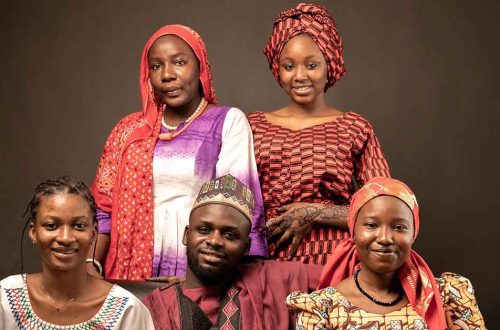









The historical connection between the African continent and the biblical narrative is both deep and significant. For centuries, Western art and culture have shaped the popular image of Christianity, frequently presenting it through a distinctly European perspective. However, a thorough examination of biblical texts, geography, and history reveals that the narrative is deeply rooted in Africa and the Middle East.
This article examines the profound historical ties between Africa and the origins of Christianity.
Africa as a Central Stage in Biblical History
Biblical events did not occur in a geographical vacuum. The so-called Holy Land is situated at the intersection of Africa, Asia, and Europe, yet the African continent plays a disproportionately significant role in the biblical narrative.
Numerous foundational events and figures in the biblical narrative are closely associated with Africa, particularly Egypt and the surrounding regions:
- Abraham in Egypt: The patriarch of the faith sought refuge in Egypt during a famine (Genesis 12).
- Joseph’s Rise to Power: Joseph was sold into slavery in Egypt, eventually rising to become second-in-command to the Pharaoh, saving the region from famine (Genesis 37-50).
- The Israelites’ Sojourn: The Hebrew people lived in Egypt for over 400 years, growing into a nation before the Exodus led by Moses (Exodus 1-14).
- Moses: Born in Africa, raised as an Egyptian prince, and married to Zipporah, a Midianite (often associated with the broader Afro-Arabian region) and later a Cushite (Ethiopian) woman (Numbers 12:1).
- The Queen of Sheba: A powerful monarch from the region corresponding to modern-day Ethiopia/Yemen who visited King Solomon seeking his wisdom (1 Kings 10).
- Simon of Cyrene: The man compelled to carry Jesus’ cross was from Cyrene, located in modern-day Libya, North Africa (Mark 15:21).
- The Ethiopian Eunuch: One of the earliest recorded Gentile converts to Christianity was a high-ranking Ethiopian official, baptized by Philip (Acts 8).
Africa was not a peripheral location in the biblical narrative; rather, it served as a place of refuge, revelation, and redemption.
The Flight to Egypt as the Ultimate Refuge
One of the most significant connections between Africa and the life of Jesus is the “Flight to Egypt.”
According to the Gospel of Matthew (2:13-15), when King Herod ordered the massacre of male infants in Bethlehem, an angel warned Joseph in a dream. Joseph took Mary and the infant Jesus and fled to Egypt, remaining there until Herod’s death.
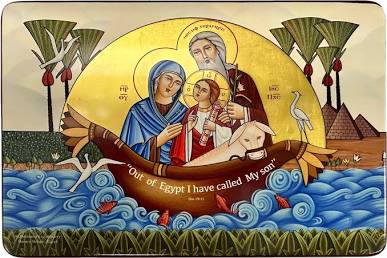
This event holds considerable significance. When the Son of God required protection from political violence and assassination, sanctuary was found on the African continent. As a result, Jesus spent part of his early childhood in Africa. The Coptic Orthodox Church in Egypt preserves extensive traditions and specific sites associated with the Holy Family’s journey through the region.
Reclaiming the Historical Narrative
Africans possess a foundational claim to Christian heritage, as the religion’s roots are inextricably linked to the African continent rather than Europe. The biblical narrative is anchored in African geography, with pivotal events and figures—including Abraham seeking refuge, Joseph’s rise to power in Egypt, Simon of Cyrene carrying the cross, and the early conversion of the Ethiopian Eunuch—all centered in or connected to Africa.
Most significantly, Jesus spent part of his early childhood as a refugee in Egypt, finding sanctuary from King Herod among a North African population. His historically accurate Middle Eastern, olive-to-brown-skinned appearance enabled his family to blend into the local community. Ultimately, this article contends that Christianity was not a European religion imported to Africa, but rather a faith whose historical, geographical, and physical origins are deeply embedded in the African and Middle Eastern world.